Phulkari Suit Sets — Hand-Embroidered Punjabi Dress Material
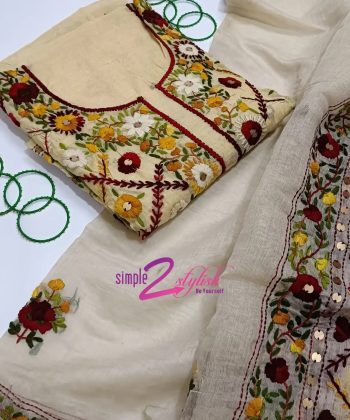
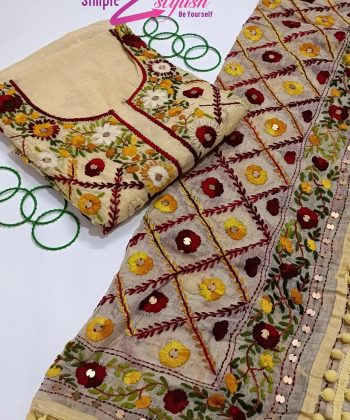
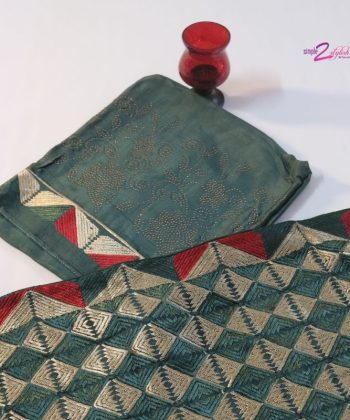
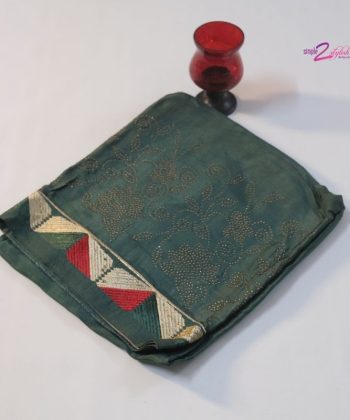
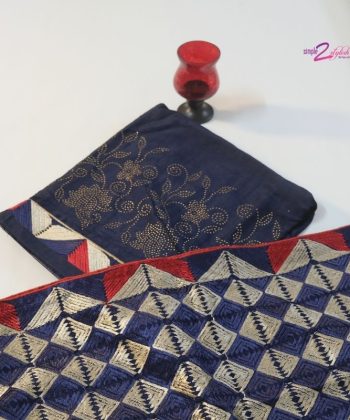
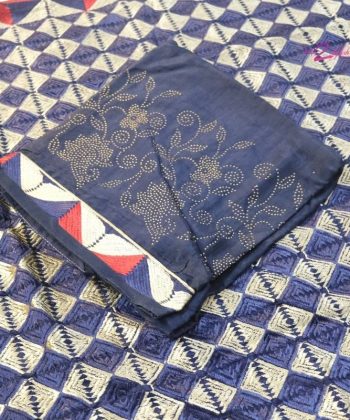
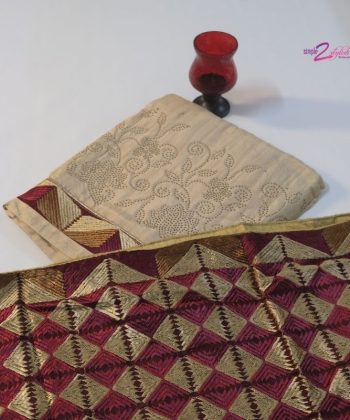
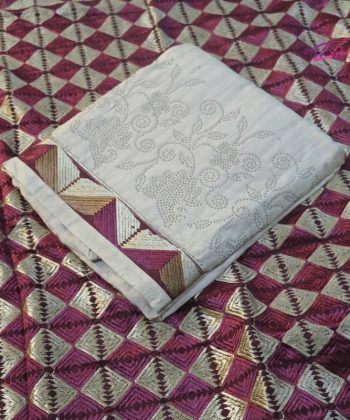
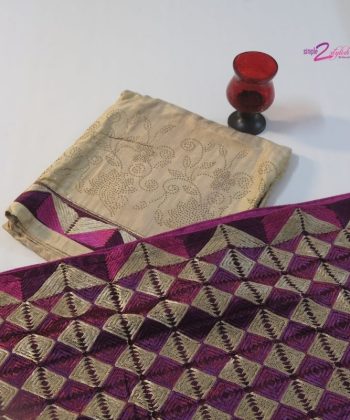
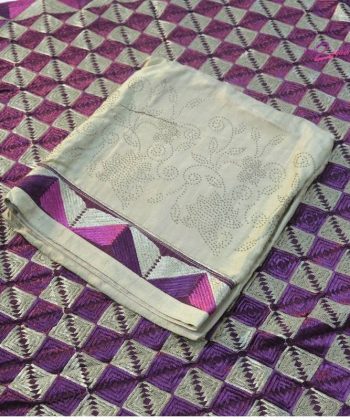
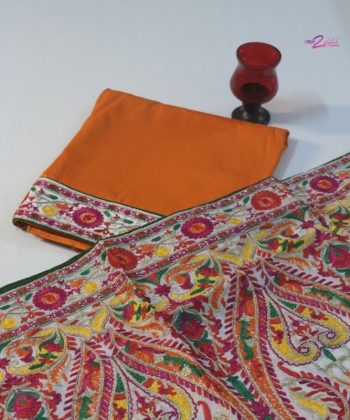
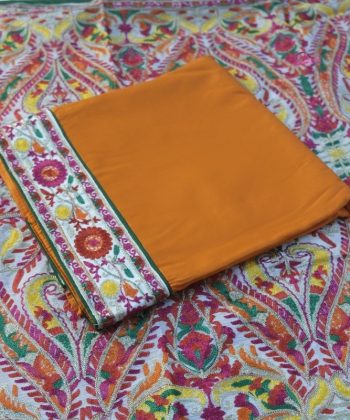
Phulkari means flower work, and it is the embroidery tradition of Punjab — floss silk thread worked in darning stitch from the reverse of the cloth, so the pattern builds up on the front in dense geometric blooms. A phulkari suit set carries that embroidery on the dupatta, and often on the kurta yoke as well, over a plain cotton or georgette base. Ours is hand embroidered phulkari from Punjab.
What distinguishes hand phulkari from machine work
In hand phulkari the stitch runs long on the face of the cloth and short on the reverse, so the front carries almost all the thread and catches light like satin. Turn a hand-worked piece over and you see small, economical stitches and loose thread ends; turn a machine-embroidered one over and you see a dense backing and a bobbin thread in a different colour. Hand work also drifts — motifs are not identical across the dupatta, and the density varies where the embroiderer’s tension changed. Machine work is uniform to the millimetre.
Where a phulkari suit belongs
Traditionally phulkari marked occasions — weddings, births, festivals — and the heaviest pieces, the bagh, covered the ground cloth almost entirely. Contemporary phulkari suit sets are lighter, worked in bands and borders rather than all over, which makes them wearable for a family function, a festival, or an office day when you want colour without formality. The classic palette is magenta, orange and gold floss on a red, black or white ground, though softer pastels have become common.
Caring for phulkari embroidery
Dry clean anything heavily worked. Lighter pieces can be hand washed very gently in cold water, but never scrub the embroidered area and never wring it — floss silk snags and pulls easily. Press from the reverse over a soft towel so the stitches keep their loft, and store folded with the embroidery facing inward.
Frequently Asked Questions
What is phulkari embroidery?
Phulkari is the traditional embroidery of Punjab, worked in floss silk thread using a darning stitch from the back of the cloth so that the pattern forms in dense geometric flowers on the front. The name translates literally as flower work.
How do I know if a phulkari suit is hand embroidered?
Turn it over. Hand phulkari shows small, economical stitches and loose thread ends on the reverse, with almost all the thread lying on the face. Machine embroidery shows a dense backing and a bobbin thread, and the motifs repeat with perfect uniformity.
What is the difference between phulkari and bagh?
Bagh means garden, and it describes phulkari worked so densely that the embroidery covers the base cloth entirely, leaving no ground visible. Ordinary phulkari leaves the fabric showing between motifs. Bagh pieces were traditionally made for weddings and are considerably heavier to wear.
Can a phulkari suit set be worn other than at weddings?
Yes. Contemporary sets are worked in bands and borders rather than all over the cloth, which makes them light enough for festivals, family functions and everyday wear when you simply want some colour. Only the heavily embroidered pieces remain strictly occasion wear.
How should phulkari embroidery be washed?
Dry clean heavily embroidered pieces. Lighter ones can be hand washed gently in cold water without scrubbing or wringing the worked area, as floss silk snags easily. Press from the reverse over a towel so the stitches keep their raised texture.
Showing all 6 results