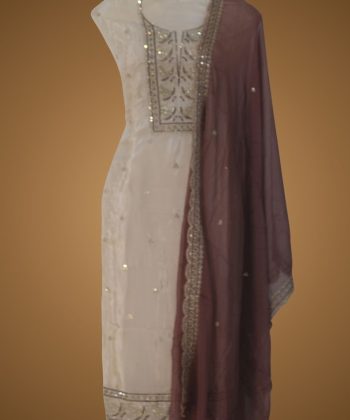
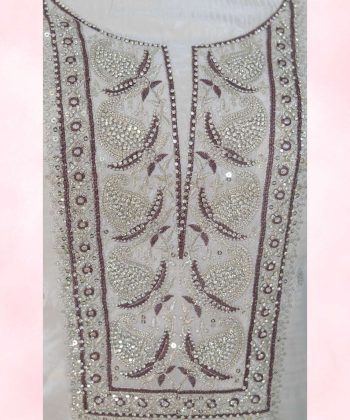
Party Wear Unstitched Suits — Party Wear Dress Material for Ladies
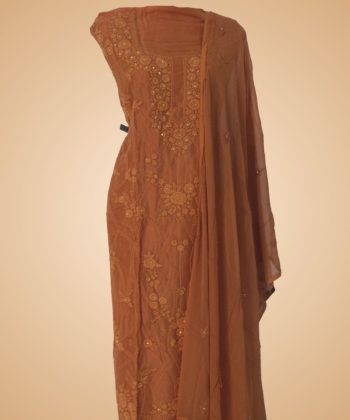
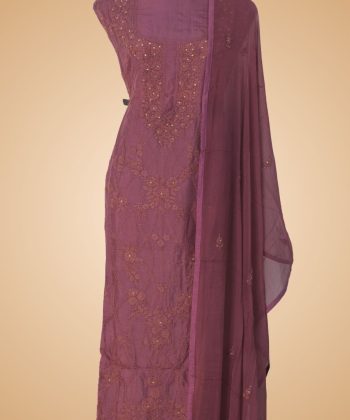
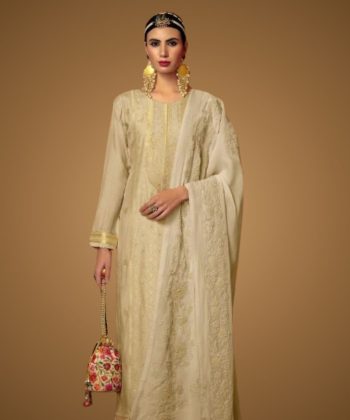
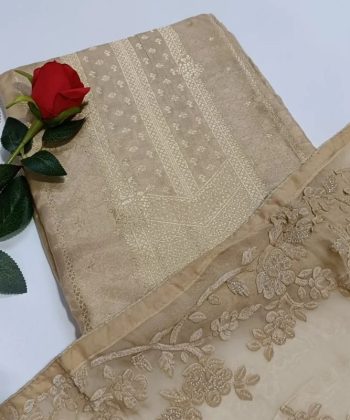
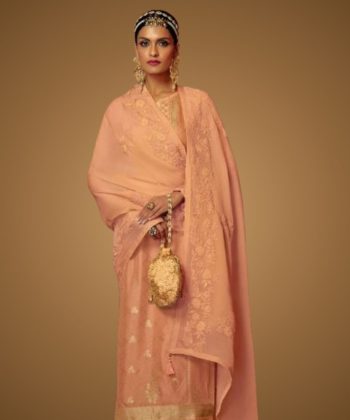
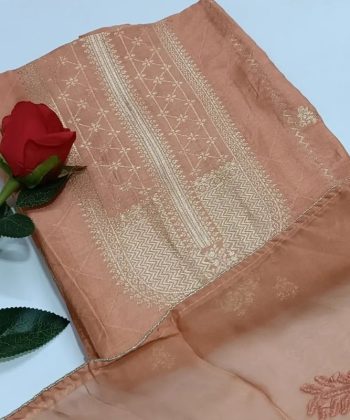
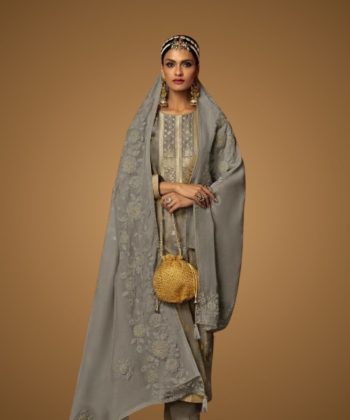
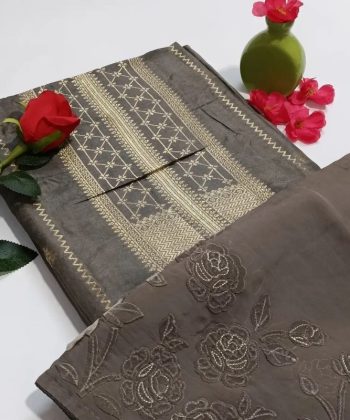
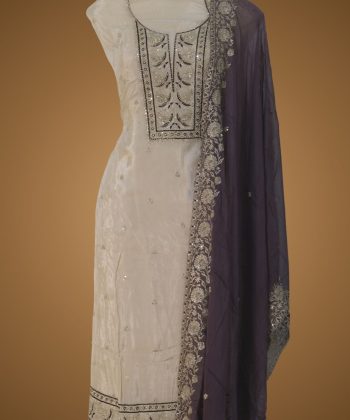
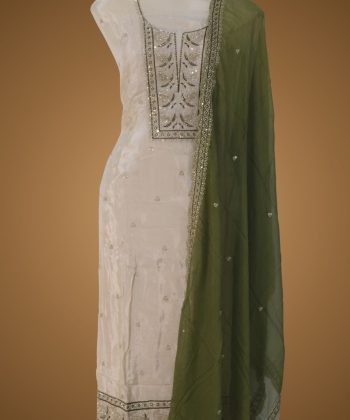
Party wear is what you reach for when a cotton suit will not do. This section carries jam satin, cotton silk, modal silk, organza, muslin and upada silk, with phulkari suit sets and madhubani print suits alongside them. Every set comes with a matching dupatta — pure, organza, cotton silk, embroidered, or mulmul finished with lace.
What makes a suit read as party wear
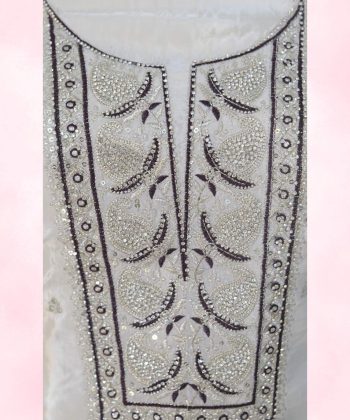
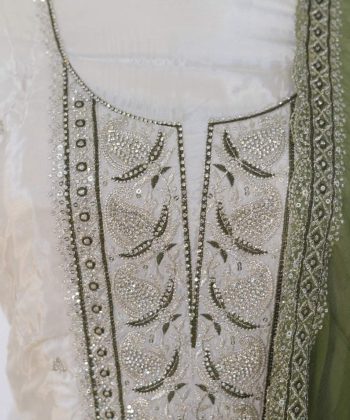
Three things, in roughly this order: the way the fabric catches light, the weight of the dupatta, and the finish at the borders. A satin-faced weave handles the first — it reflects softly rather than glaring, so it looks rich in photographs without looking synthetic. A heavier dupatta handles the second — an organza, cotton silk or embroidered dupatta gives the outfit a weighted, formal fall that a plain one cannot. The third is what your tailor does with piping, borders and neckline, which is precisely why an unstitched party wear suit gives you more than a readymade one — you decide how formal it becomes.
The fabrics in this section
Jam satin carries a soft, liquid sheen without the stiffness of a heavy silk and drapes closely. Modal silk is a different proposition: modal is a regenerated cellulose fibre, and blended with silk it produces a fabric that is cooler against the skin than pure satin and resists creasing, which makes it useful for long functions and for travel. Cotton silk gives you a party look you can wear all day, organza brings structure and shine, muslin is the softest of the group, and upada silk has a fine, light drape. Phulkari and madhubani print in cotton silk and crepe sit here too, for anyone who wants craft rather than sheen. All of them take deep jewel colours well — magenta, navy, pista green, peach — which is where most of this section sits.
Getting it stitched
Satin-faced fabrics show every stitch line, so this is not the place to economise on tailoring. Ask for French seams or a proper lining on the top, and allow a little more fabric than usual for the neckline finish. Dry clean only. Store folded with tissue rather than on a hanger, which can leave a shoulder mark in the satin over time.
Frequently Asked Questions
Is a party wear unstitched suit better than a readymade one?
For an occasion outfit it usually is, because the fit and the finish are what make a party suit look expensive. Unstitched lets your tailor cut to your measurements and decide the neckline, borders and lining, none of which a standard readymade size offers you.
Which fabrics count as party wear here?
Jam satin, cotton silk, modal silk, organza, muslin, upada silk and gajji silk, plus phulkari suit sets and madhubani print suits worked in cotton silk and crepe. Each product page names the fabric so you can choose by feel and season rather than by photograph alone.
Does the dupatta come with the party wear sets?
Yes — every set includes a matching dupatta. Depending on the design that is a pure dupatta, an organza or cotton silk dupatta, an embroidered one, or mulmul finished with lace. The product page states which dupatta is included with each design.
What should I wear to a long wedding function?
Modal silk or cotton silk, if you will be in it for several hours. Both are cooler than pure satin and crease far less, so the suit still looks composed at the end of the evening. Keep the heavier gajji silk and organza pieces for shorter, more formal events.
How do I care for a party wear suit?
Dry clean the satin-faced and silk fabrics. Between wears, air the garment and store it folded with tissue paper rather than hung, which prevents a shoulder mark forming in the cloth.
Showing all 8 results