Cotton Dress Material for Women — Pure Cotton Suits with Dupatta
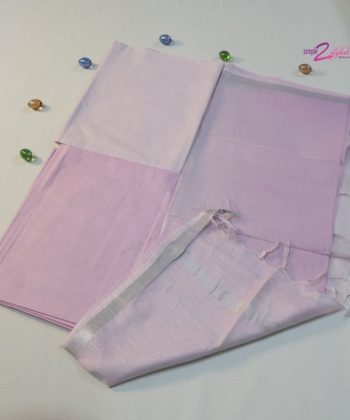
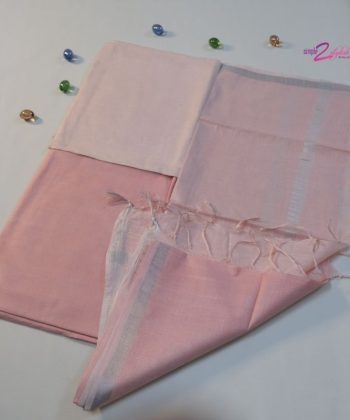
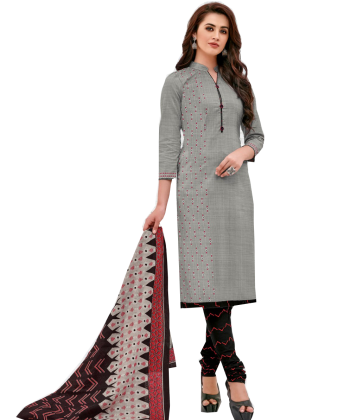
Pure cotton dress material is what most women in India reach for nine months of the year, and it is the largest section in our store. Every set is unstitched and comes with a matching cotton dupatta, so you get a complete suit ready for your tailor — printed florals, geometric blocks, plain dyed cottons and two-tone combinations.
Why pure cotton earns its place in an Indian wardrobe
Cotton breathes. In humidity it lets sweat evaporate instead of trapping it against the skin, which is why a cotton salwar suit stays wearable through an afternoon that a synthetic one does not survive. It takes dye and block prints beautifully, it softens rather than degrades with washing, and it is forgiving of the daily wear that office and college routines demand. Pure cotton suits with cotton dupatta also drape differently from blends — heavier, quieter, less prone to static and clinging.
The weaves within the cotton family
Not all cotton is the same cloth. Jaipuri cotton is hand block printed and is the everyday favourite in this section. Cotton satin is cotton mixed with satin for extra strength and colour durability — very soft, and comfortable to wear through summer. Cotton silk blends a cotton warp with a silk weft, giving you the comfort of cotton with a low sheen that carries into evening wear. Pakistani lawn cotton is finely and tightly woven, crisp when new and softening with each wash. Ikat cotton is yarn-dyed before it is woven, which is what gives its pattern that soft feathered edge. Bandhani and phulkari are worked on cotton too, so both sit inside the cotton family as well as in their own sections. Knowing which weave you are buying matters more than the colour when you are choosing for a season.
Looking after cotton dress material
Wash the first time separately and in cold water — printed cottons can release a little dye on the first wash, and that is normal rather than a fault. After that, a mild detergent and a shaded line-dry will hold the colour far longer than machine drying or direct sun. Press on a medium heat while very slightly damp. Treated this way a cotton suit will outlast several seasons of readymade ones.
Frequently Asked Questions
Is this pure cotton or a cotton blend?
Fabric composition is stated on every individual product page, and the pure cotton sets are described as such. Where a fabric is a blend — cotton silk, for instance — the listing says so.
Does the dupatta come in cotton as well?
In the pure cotton sets, yes — the dupatta is cotton and dyed or printed to match the suit. Some festive sets pair a cotton top and bottom with a contrast dupatta in another fabric, and where that is the case the product page states it plainly.
Will a printed cotton dress material lose colour in the wash?
A small amount of dye release on the first wash is normal for printed cotton and is not a defect. Wash it separately in cold water the first time, then dry it in shade. Handled that way the print holds its depth for years.
What is cotton satin, and how is it different from ordinary cotton?
Cotton satin is cotton mixed with satin, which gives the cloth extra strength and makes the colour last longer than it does on a plain cotton. It is very soft against the skin and comfortable through summer, and it carries a light sheen that plain cotton does not have.
Which cotton is best for daily office wear?
A medium-weight plain or small-print cotton holds its shape through a working day better than a very fine weave, and it creases less on a chair. Cotton satin is the other good office choice — soft, strong and slow to lose its colour. Save the very light weaves for weekends and hot afternoons, where their lightness is the point.
Showing 1–16 of 43 results